

Criticism can come in many forms today, with the rise of online services and marketing, we don’t only receive criticism from our peers and superiors, we can receive it online from sources we don’t particularly know personally. How do we deal with criticism both in person and online without it having a negative impact on our creativity or productivity? Here are a few tips:
Focus on the problem, not the person.
Sometimes, criticism isn’t based on bad intent. There may be people in our lives or online looking to constructively give their opinion on what changes you could make to positively impact the outcome of your work. Focusing on the problem they present and looking at it objectively could help you improve your technique. Even if it stirs up a few negative emotions when first being confronted with the criticism, take your time and turn your focus on the problem, and not the person it came from.
Don’t react, rather respond.
There is a big difference between reacting to an unsolicited comment and responding to it. Reacting is based on the immediate emotion it presents. Responding is collecting your thoughts and replying with a measure of mindfulness. Reacting sometimes causes a chain reaction, with the person delivering criticism perhaps becoming more negative with each attacking response. Here is an example:
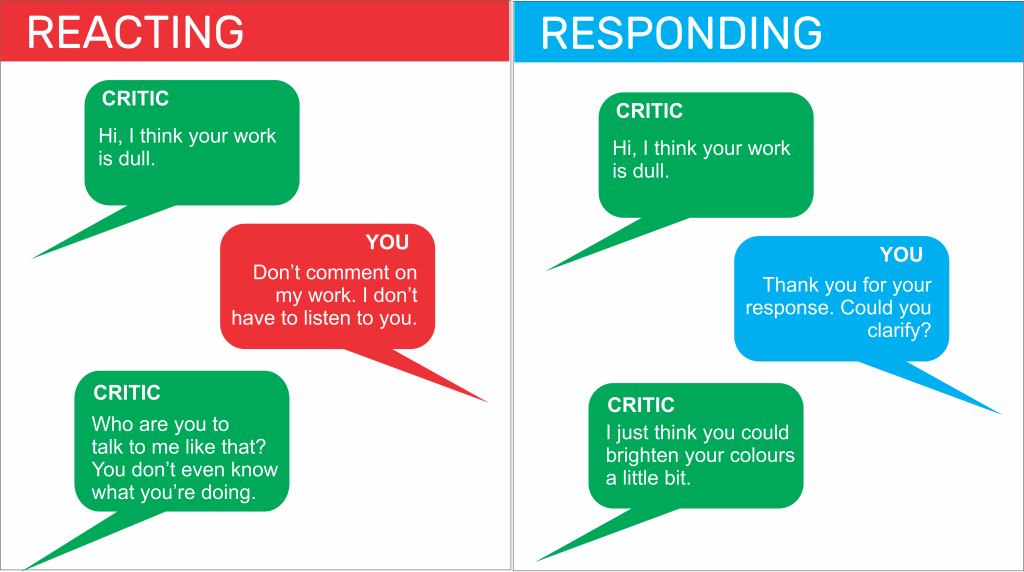
Keep in mind that you can be selective with the advice you receive from anonymous critics, but responding with mindfulness could keep negative exchanges to a minimum.
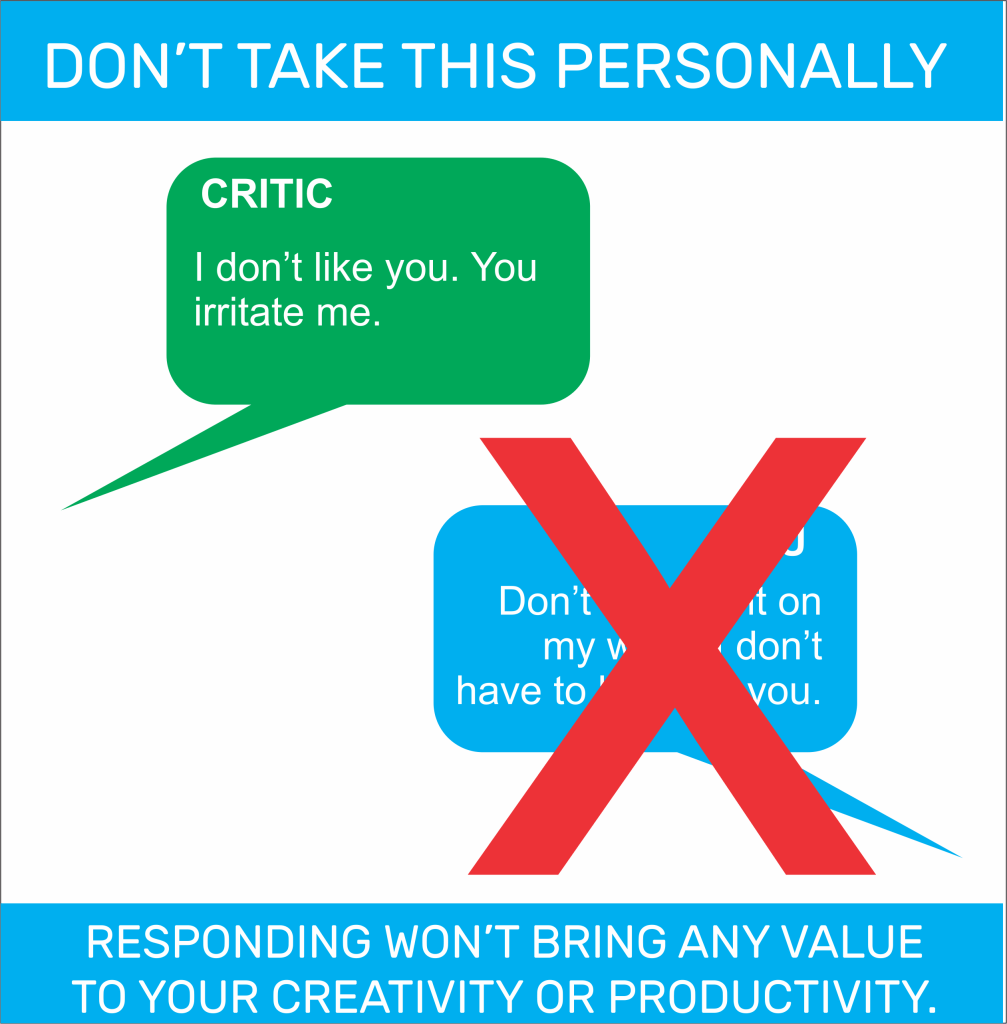
Don’t take it personally.
Sometimes, especially online, we could encounter criticism that has no meaning behind it. With the ability to remain anonymous online, anyone could make a comment that could be demeaning or personal with the intent to reduce your creativity. Gathering your thoughts and not taking these comments personally is the best way to overcome them. Comments like these in particular require no response, allow yourself to realise that the commentator is venting their personal frustration and that it may not bring value or be relevant to improving your work:
Consider the source.
When we receive criticism from anonymous individuals online, we have the freedom to be selective about what we take note of. This changes however if we’re receiving criticism from a superior, colleague or customer. It’s important to actively listen to the individuals directly involved with your work to understand how you can improve and avoid any conflict in the future.
How do you handle negative criticism?
Would you like to further your soft skills? Mind the Gap Solutions offers short soft skills training for teams and individuals. Get in touch here for more information. View our website here for a look at the comprehensive services we offer South African businesses.

